
Quick Summary
Dubai consistently delivers gross rental yields of 6% to 8% on apartments, 5% on townhouses, and around 4.5% to 5% on villas, based on April 2026 registered contract data from Property Monitor. After costs, most investors net 4% to 6% annually, tax-free, which compares favourably against London, Singapore, and most European city equivalents. What you actually earn depends less on Dubai as a whole and more on property type, location, and how the unit is managed.
If you are considering buying property in Dubai for rental income, the answer to what you can expect is both more specific and more honest than most conversations about this market tend to be. Start with what yield actually means in practice, then look at what tenants are genuinely paying right now.
Start With What Yield Actually Means
When someone tells you Dubai offers 7% rental yield, they mean that a property purchased at AED 1,000,000 generates roughly AED 70,000 per year in rent. That is the gross figure. Your net return, after costs, is lower. How much lower depends on the property.
For context, AED 70,000 per year is approximately $19,000 or £15,000. With no local income tax in Dubai, that amount reaches your account without the 20% to 45% deduction that would apply in the UK, US, or most of Europe. That tax difference is one of the most significant and genuinely underappreciated advantages of Dubai as an investment location.
Is Dubai Good for Rental Income?
By most global measures, yes. Gross yields of 6% to 7% on apartments are roughly double what investors earn in London, New York, or Singapore. The absence of local income tax means that gap widens further in practice, because what you earn in Dubai you largely keep, whereas rental income in most Western markets is taxed at your marginal rate.
The other factor worth considering is currency stability. Rent in Dubai is paid in AED, which has been pegged to the US dollar since 1997. For investors from volatile currency environments, that peg provides a degree of income stability that property in many other markets cannot offer.
Dubai is not without risk. Oversupply in certain apartment segments, service charge increases, and rent controls all affect returns. But as an income-generating asset class in a tax-efficient, dollar-linked environment with deep tenant demand, Dubai property compares favourably against most alternatives at a similar price point.
What the April 2026 Data Actually Shows
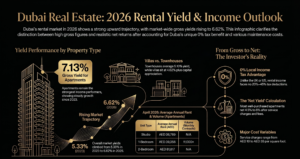
Dubai’s overall gross rental yield across all property types sits at 6.62% as of April 2026. The number looks different depending on what you buy.
Apartments are the strongest performer at 7.13% gross yield. Townhouses come in at 5.10%. Villas sit at 4.62%. These figures come from actual registered contracts, not asking prices or agent estimates.
Yields have been rising steadily. In May 2023, the market-wide gross yield was 5.33%. It has climbed to 6.62% by April 2026. Apartments have driven most of that movement, going from 5.78% to 7.13% over the same three years. That trajectory matters if you are buying now: apartments have been the most consistent income performers across that period, and the trend has not reversed.
What Different Property Types Generate
For an investor trying to size an expected return, the most useful lens is property type and bedroom count. Here is what tenants in Dubai were actually paying in April 2026.
Apartments
28,650 contracts were signed in April 2026 alone, totalling AED 1.97 billion in annual rent. That volume tells you the market is liquid. You can find tenants, and you can exit if needed.
Studios averaged AED 38,769 per year. One-bedroom apartments, the most transacted unit type with over 11,000 contracts in a single month, averaged AED 59,356. Two-bedroom apartments averaged AED 81,817. Those are the three size categories where investor returns are typically strongest because purchase prices are more accessible and tenant demand is deep.
If you buy a one-bedroom apartment at AED 800,000 in a well-located community and rent it for AED 60,000 per year, that is a 7.5% gross yield. Subtract service charges, a month of vacancy, and any management fees, and your net return lands around 5% to 5.5%. On AED 800,000 invested with no tax on the income, that is AED 40,000 to AED 44,000 per year reaching your account.
Villas
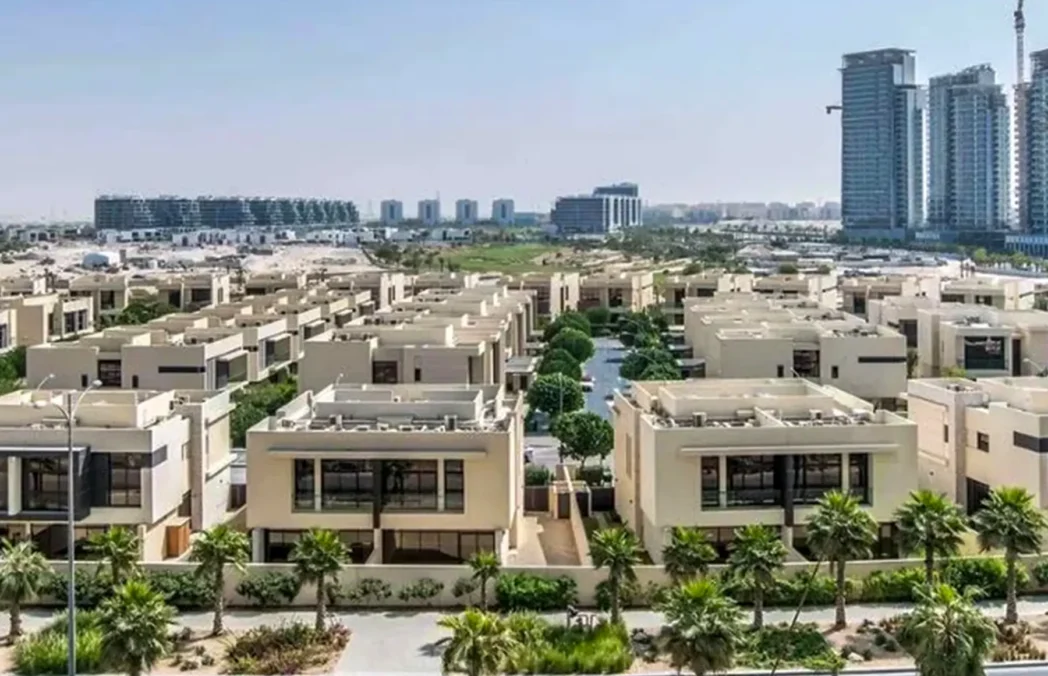
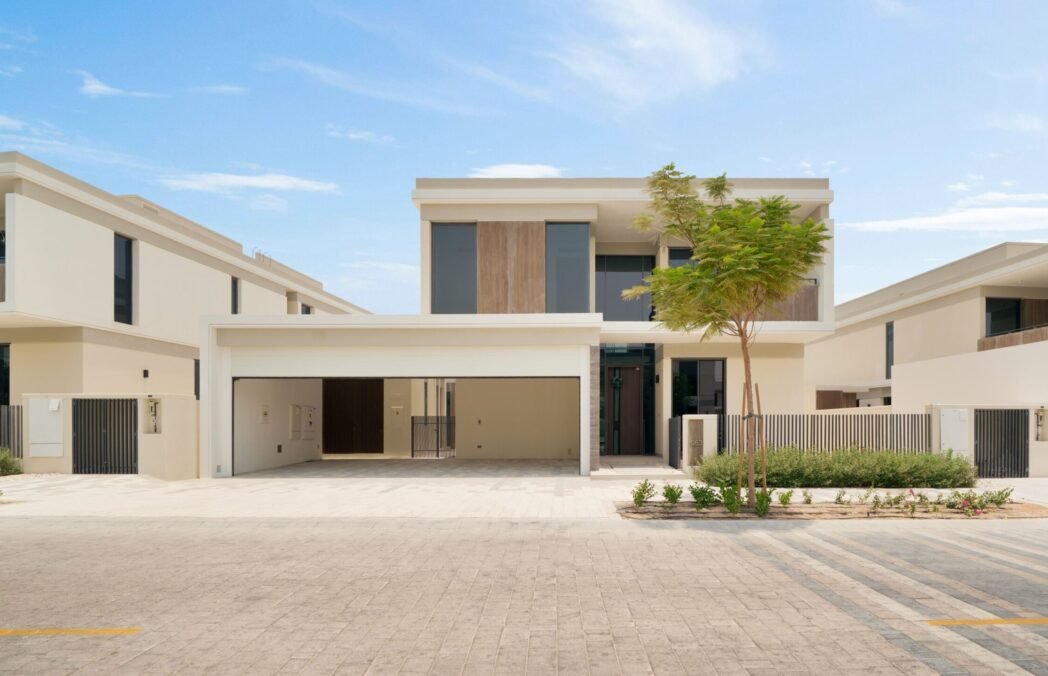
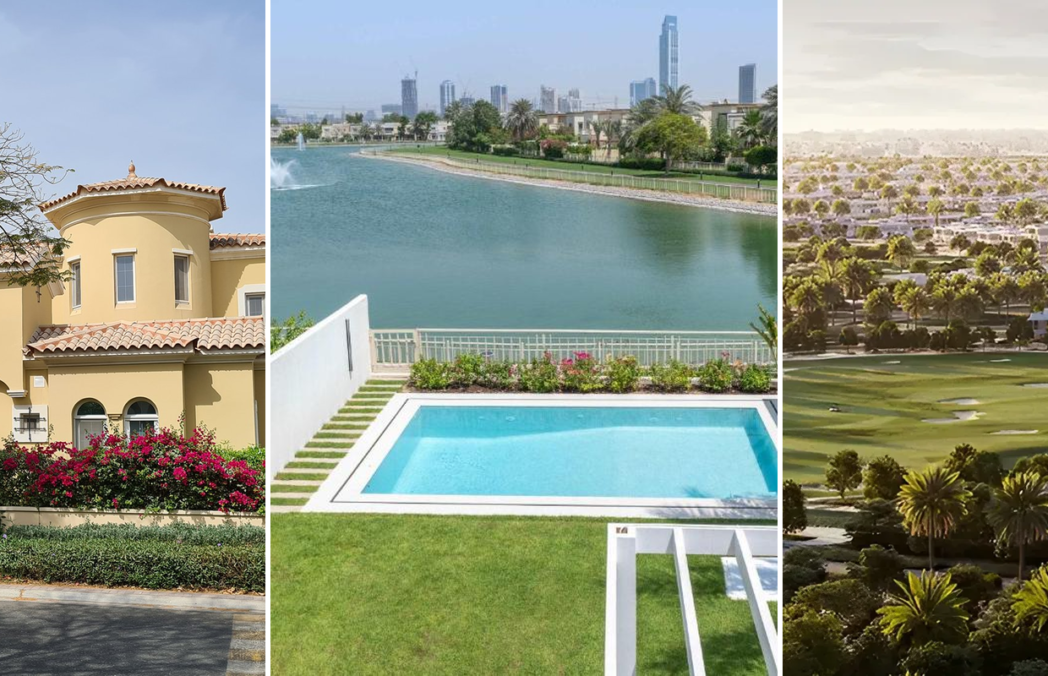
A different calculation. The average annual rent for a four-bedroom villa in April 2026 was AED 334,458. Five-bedroom villas averaged AED 446,522. These are substantial income figures in absolute terms, but the purchase prices are larger, which is why yields compress to 4.62% on average. Investors who buy villas in Dubai are typically making a combined bet on rental income and capital appreciation, particularly in communities like Dubai Hills Estate, Umm Suqeim, and Arabian Ranches where tenant demand from high-income families is sustained.
Townhouses
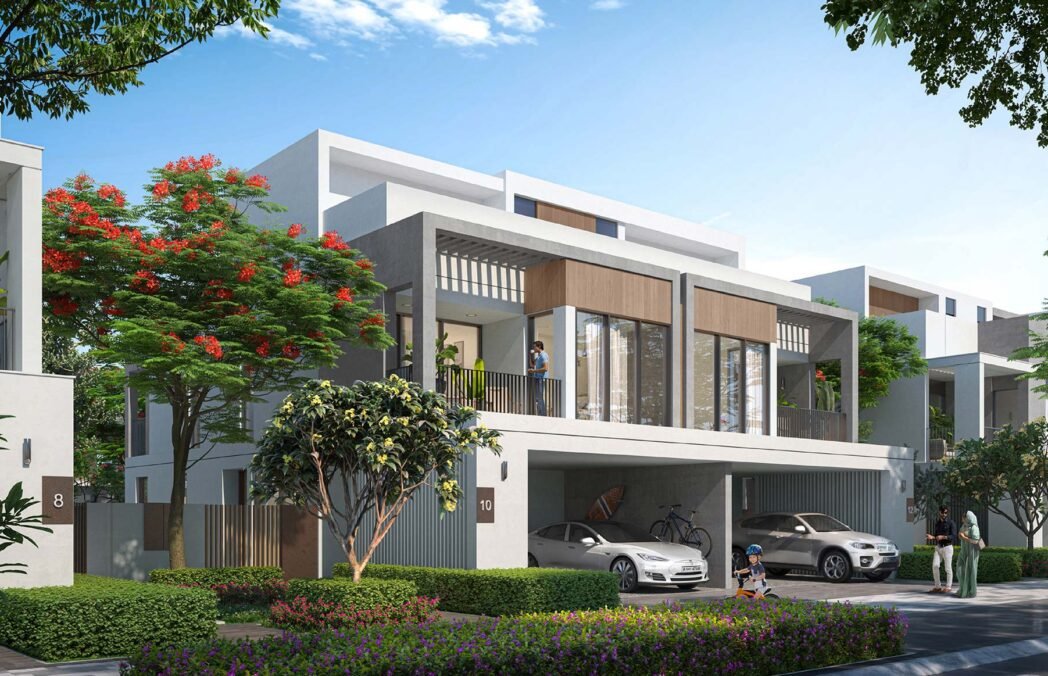
The middle ground. Three-bedroom units dominate the market at AED 151,676 average annual rent, with a gross yield of around 5.10%. Good for investors who want something between the high yield of apartments and the absolute income of villas, particularly in community developments where family occupancy tends to be stable and tenancy lengths longer.
The Cost Conversation
Gross yield is what gets quoted in listings. Net yield is what you actually earn. The difference is real and worth understanding before you buy.
Service charges are the biggest variable. These are annual fees paid to the developer or owners association for maintenance of shared spaces and facilities. In well-established communities they run AED 10 to AED 18 per sq ft per year. In premium towers with more amenities, AED 20 to AED 35 per sq ft is common. On a 900 sq ft apartment, that is anywhere from AED 9,000 to AED 31,500 per year, before rent reaches your account. Checking the RERA service charge index for a specific building before you buy can save you from a costly surprise.
Vacancy sits at roughly 2 to 4 weeks between tenancies in a well-managed property. That is around 4% to 8% of your annual income gone before you account for anything else.
Property management fees, if you hire someone to handle the tenancy rather than managing it yourself, typically run 5% to 8% of annual rent. For overseas investors this is usually unavoidable and should be factored in from the start.
Maintenance runs AED 3,000 to AED 8,000 per year on a typical apartment, more for larger units. Not every year will hit those numbers, but budgeting for them keeps your yield projections honest.
Add those up and most well-purchased apartments will net 4.5% to 6% after costs, and most villas and townhouses will net 3% to 4.5%. These are still strong returns by global standards. London residential property typically nets 2% to 3.5%. New York is similar. Singapore lower still.
Which Areas Produce the Strongest Returns
Location shifts the yield picture considerably. In April 2026, Jumeirah Bay Island commanded the highest average apartment rent in Dubai at AED 537,727 per year. But premium locations also carry the highest purchase prices, which can compress percentage yields even as absolute income rises.
For investors optimising yield as a percentage, more accessible apartment communities in areas like Jumeirah Village Circle, Dubai Silicon Oasis, Discovery Gardens, and Motor City have historically produced some of the strongest gross returns, precisely because entry prices are lower relative to achievable rents.
For villas, Dubai Hills Estate and Umm Suqeim sit at the top of the per-square-foot rental market at AED 284 to AED 286 per sq ft, reflecting sustained demand from corporate and professional households. Arabian Ranches, The Meadows, and Nad Al Sheba Gardens offer strong family tenant demand at more moderate entry prices.
The practical implication for an investor: a AED 2 million apartment in Downtown Dubai will likely yield less as a percentage than a AED 900,000 apartment in a mid-market community. The Downtown unit may appreciate more over time. The mid-market unit will return more income per dirham invested. Neither is the wrong answer. It depends entirely on what you are optimising for.
Short-Term Rentals: Higher Ceiling, More Work
Dubai permits holiday home licensing under DTCM, and the income potential in tourist-heavy areas is real. Properties in Dubai Marina, Downtown, Palm Jumeirah, and JBR can outperform equivalent long-term rents by 30% to 50% in peak months.
The catch is that gross revenue and net income diverge significantly on short-term rentals. Operators typically take 20% to 25% of revenue. The landlord pays utilities. Furnishing costs more upfront. A unit at 65% to 70% average occupancy on holiday rental rates often ends up generating similar net income to a well-priced long-term tenancy, with considerably more complexity.
For investors who are hands-on, have the right property in the right location, and work with a good operator, short-term rental can outperform. For most first-time investors in Dubai, a long-term tenancy with a reliable tenant is the simpler and more predictable income structure.
Understanding RERA Rent Controls
RERA, the Real Estate Regulatory Agency, sets limits on how much a landlord can increase rent at renewal. The permissible increase depends on how far the current rent sits below the RERA market average for that area and property type. If your tenant is already paying at or near market rate, you cannot raise the rent at all.
A Realistic Return Expectation
For an investor buying a one or two-bedroom apartment in a solid community at a fair price in 2026, a net yield of 4.5% to 6% is an achievable and realistic expectation. That income is tax-free in Dubai. It arrives in AED, which is pegged to the US dollar. And it sits on top of whatever capital appreciation the property produces over time.
For villa investors, a net yield of 3% to 4.5% is more typical, but the absolute income from a AED 300,000 to AED 450,000 annual rent is meaningful, and villa capital values in established communities have held well.
Vacancy, service charge levels, new supply in a given community, and shifts in tenant demand all affect outcomes. The April 2026 data confirms that Dubai’s rental market is active and deep, with genuine tenancy volumes across every price tier. That liquidity is itself a meaningful indicator of market health.
Ready to Understand What a Specific Property Could Earn?
Vibgyor Real Estate works with investors at every stage, from identifying the right community and property type for your target return to handling the full letting process once you own as well as your exit strategy. If you want to run the numbers on a specific unit or area before you commit, the team can walk you through current rent benchmarks, service charge levels, and realistic net yield projections based on what is actually transacting in the market right now.
Get in touch with Vibgyor Real Estate to start the conversation.
Data source: Property Monitor rental analysis, April 2026. Yield index data from Property Monitor monthly rental index, May 2023 to April 2026.