Insights

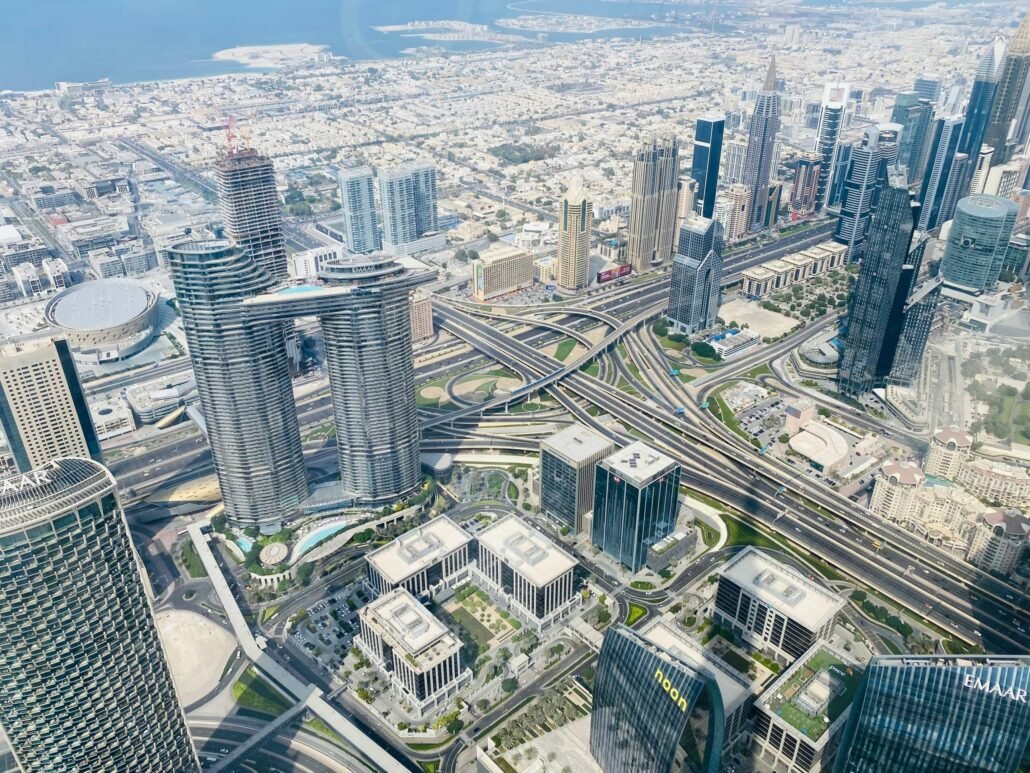
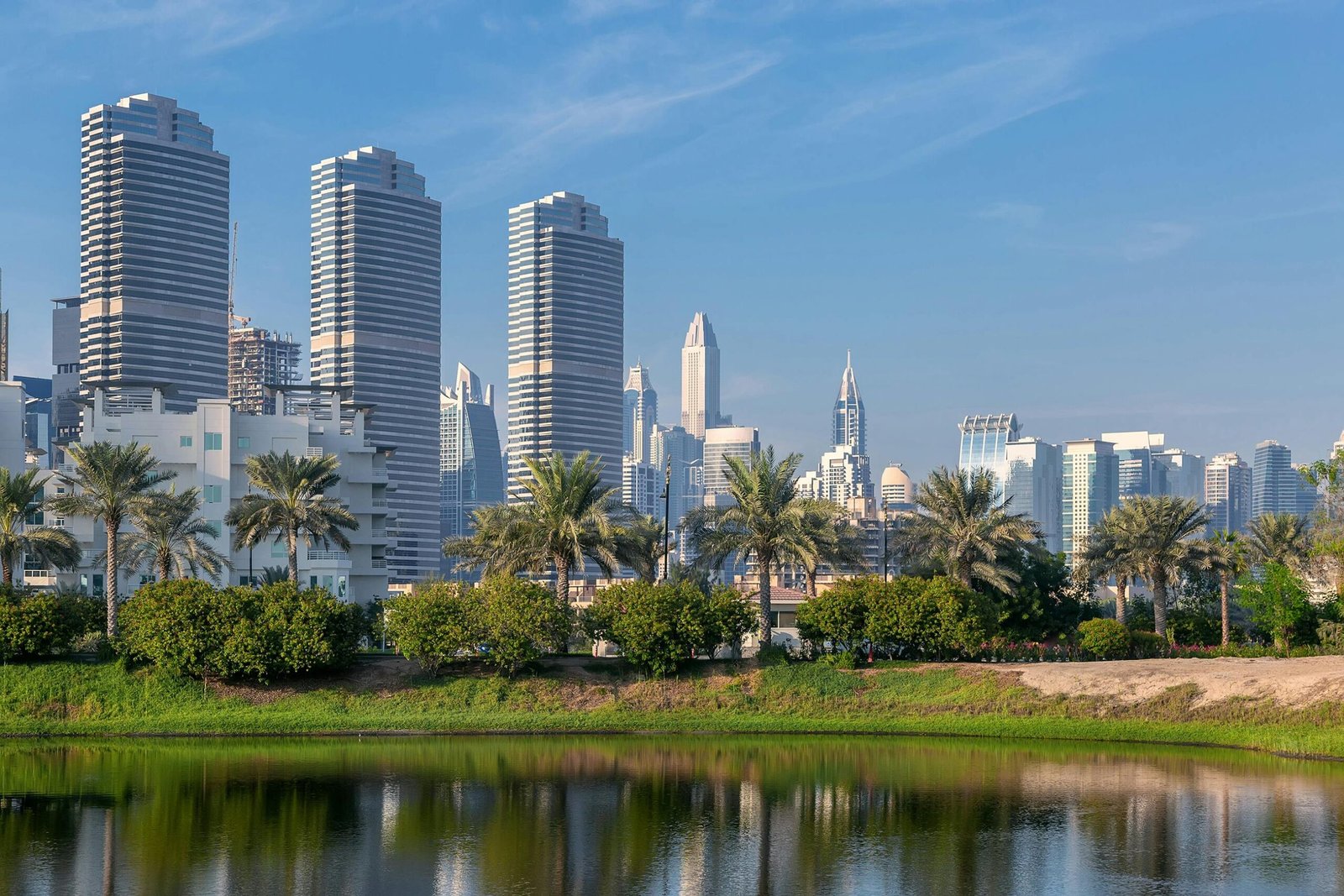
dubai aerial shot
Buyer & Investor Guides

What Is Freehold Property in Dubai? (And Is It Right for You?)

Quick Summary Freehold property in Dubai means you own the property and the land it sits on. Forever. No expiry date. No landlord above you. You can sell it, rent it out, renovate it, or pass it to your children. As a foreigner, you can buy freehold property in Dubai in designated areas. It is one of the most secure ways to invest in the UAE. So What Does Freehold Actually Mean? Freehold property in Dubai gives you complete, permanent legal ownership of both the building and the land underneath it. Think of it this way. When you buy freehold, nobody can take it back. There is no countdown clock on your ownership. It is yours until you decide to sell or pass it on. The Dubai Land Department (DLD) registers your name on the title deed. That document is your proof of ownership. What Is the Opposite of Freehold? The opposite is leasehold. With leasehold, you are buying the right to use a property for a set number of years, usually up to 99 years. You do not own the land. When the lease runs out, ownership goes back to the freeholder unless you renew. Leasehold can feel like ownership day to day, but it is not the same thing legally. Here is a simple comparison: Freehold Leasehold Own the land? Yes No Own it forever? Yes No, for a fixed term Can you sell freely? Yes Yes, within the lease term Can you renovate? Yes Only with approval Pass to heirs? Yes No Visa eligibility? Yes Usually no Can Foreigners Buy Freehold Property in Dubai? Yes. And this is a big deal. Before 2002, only UAE nationals could own property in Dubai. Then the government changed the rules. Since then, any foreign national aged 21 or over can buy freehold property in designated areas. There are no restrictions based on nationality. Whether you are British, Indian, American, German, or from anywhere else in the world, you can legally own property in Dubai in your own name. Where Can You Buy Freehold Property in Dubai? Freehold ownership is only available in specific zones approved by the government. These are called freehold areas. Some of the most popular ones include: Downtown Dubai Dubai Marina Palm Jumeirah Jumeirah Village Circle (JVC) Business Bay Arabian Ranches DAMAC Hills Dubai Hills Estate Motor City Arjan Jumeirah Park Bluewaters Island Dubai South The list has grown significantly over the years as Dubai has expanded. If you are looking at a property and are unsure whether the area is freehold, your agent should be able to confirm this instantly. What Types of Freehold Property Can You Buy? You are not limited to apartments. Freehold covers a wide range of property types. Residential: Apartments Villas Townhouses Penthouses and lofts Commercial: Office spaces Retail units Warehouses Mixed-use developments that combine residential, retail, and commercial spaces are also becoming increasingly popular. Places like Dubai Festival City and City Walk fall into this category, and they can offer multiple income streams from one investment. What Are the Benefits of Buying Freehold Property in Dubai? 1. You own it forever There is no expiry date. No renewal process. No asking a landlord’s permission. 2. You can rent it out Generate passive income by leasing your property to tenants. Dubai’s rental yields are among the highest in the world, averaging 6 to 9% depending on location. 3. You can sell whenever you want You are not locked in. If the market moves in your favour, you can sell. No approvals needed. 4. You can renovate freely Want to knock down a wall or redesign the kitchen? Go ahead. You do not need anyone’s permission for structural changes. 5. You can pass it to your heirs Freehold property in Dubai can be inherited. Leasehold cannot. 6. It can qualify you for a UAE visa This is the one many people do not know about. Buy a property and you may qualify for a 2-year residency visa. Buy one worth AED 2 million or more and you may qualify for a 10-year Golden Visa. These visas can extend to your immediate family members too. This makes freehold property in Dubai not just a financial investment, but a lifestyle one. What Is the Law Behind Freehold Property in Dubai? The legal foundation is Law No. 7 of 2006, also known as the Land Registration Law of Dubai. This law formally gave foreign nationals the right to own freehold property in designated areas. All freehold transactions must be registered with the Dubai Land Department. The DLD issues the title deed, which is the legal document proving you own the property. For off-plan purchases, buyer funds are protected through escrow accounts under Law No. 8 of 2007. Developers must deposit all buyer payments into registered escrow accounts regulated by RERA (Real Estate Regulatory Agency). This means your money is protected and can only be used to build the project you paid for. How Do You Buy Freehold Property in Dubai? The process is more straightforward than most people expect. Decide on your budget and goals (investment, holiday home, or permanent residence) Choose your preferred area and property type Work with a registered real estate agent Agree on a price with the seller Sign a Memorandum of Understanding (MOU) Pay a deposit (typically 10%) Complete the transfer at the Dubai Land Department Receive your title deed The whole process can take as little as a few weeks for a ready property. What Does Freehold Property Cost in Dubai? The range is wide. That is actually one of the reasons Dubai attracts so many different buyers. You can find apartments in areas like International City or JVC starting from around AED 400,000. On the other end, ultra-luxury penthouses on Palm Jumeirah or in Downtown Dubai can cost tens of millions. The key question is not just what you can afford today. It is what the property will be worth tomorrow, and what it can earn you in
Read More »
Dubai real estate
For Sellers

How to Sell Property in Dubai: Complete Guide for 2026

Quick Summary Selling property in Dubai involves a defined sequence of steps overseen by the Dubai Land Department, from appointing a RERA-registered agent and signing Form A, through to the NOC and final ownership transfer. The market is active, with 61,437 transactions registered in 2026 year to date worth AED 184.6 billion. Apartments are the most liquid asset class, accounting for over 80% of all sales. A well-priced apartment in an active community can sell within 30 to 60 days. Fees for the seller typically include agent commission of 2%, a developer NOC fee of AED 500 to AED 5,000, and a DLD admin fee of AED 2,100 to AED 4,200. There is no capital gains tax on property sales in Dubai. Is Now a Good Time to Sell Property in Dubai? By most measures, yes. Dubai’s property market has registered 61,437 transactions worth a combined AED 184.6 billion in 2026 year to date, according to Property Monitor. That volume reflects a market with genuine depth and active buyer demand across multiple price tiers. The most active price corridor in the market is AED 1 million to AED 2 million, accounting for over 39% of all transactions. If your property sits in that range, you are selling into the busiest segment of the Dubai market. Seasonally, January to March sees the highest buyer activity, driven by cooler weather, an influx of international visitors, and global events bringing high-net-worth buyers to the city. That said, Dubai’s transaction volumes remain strong year-round in a way that most comparable global cities do not match. What Is My Property Worth? Current Dubai Sale Prices in 2026 Before you set an asking price, it helps to understand where the market actually is. The following average sale prices are drawn from Property Monitor’s 2026 year-to-date sales data across all registered transactions in Dubai. By bedroom type (averages): Studio: AED 783,036 average sale price (AED 1,891/sq ft) 1 Bedroom: AED 1,509,641 (AED 1,905/sq ft) 2 Bedroom: AED 2,724,283 (AED 2,048/sq ft) 3 Bedroom: AED 4,961,090 (AED 2,079/sq ft) 4 Bedroom: AED 6,033,139 (AED 1,644/sq ft) 5 Bedroom: AED 10,503,818 (AED 1,821/sq ft) By property type, the average price per sq ft breaks down as follows: Apartments at AED 1,993/sq ft Villas at AED 2,237/sq ft Townhouses at AED 1,381/sq ft These are averages across all areas and specifications. Location, floor level, view, finishing quality, and building management all shift individual unit values considerably. For a more granular benchmark, the Dubai Land Department‘s transaction portal publishes registered sale prices by area and unit type, allowing you to compare your property against what has actually sold nearby rather than what is currently listed. Overpricing at launch is one of the most common and costly mistakes sellers make in Dubai. Properties that sit on the market for more than 60 days accumulate a visible listing history on portals, which buyers use as leverage to negotiate downward. Is It Easy to Sell Property in Dubai? It depends significantly on what you own. Dubai’s property market is not uniformly liquid, and the transaction data makes that clear. Apartments account for 50,343 of the 61,437 total transactions registered in 2026 year to date, according to Property Monitor. Villas account for just 3,697. One-bedroom apartments alone represent 35.4% of all transactions in the market. If you own a one or two-bedroom apartment in a community with strong demand, a well-priced unit should attract offers within weeks. Villas and larger units are a different story. The market exists and prices have risen strongly, but the buyer pool is smaller, due diligence takes longer, and the time from listing to transfer is typically extended. Sellers of villa units should budget for a 60 to 120 day sales cycle as a realistic expectation rather than an exception. How to Sell Property in Dubai: Step by Step The Dubai Land Department oversees all property transactions in the emirate. Every sale must be registered with the DLD, and the process follows a defined sequence regardless of whether you use an agent or sell privately. Get Your Documents Ready Before you list, have the following in order: your original title deed (or Oqood certificate for off-plan properties), your Emirates ID or passport with valid residency visa, a clearance certificate confirming no outstanding service charges, and if the property carries a mortgage, your mortgage documentation and confirmation from the bank of the outstanding balance. Non-residents should note that a 2025 DLD ruling requires sellers to hold a UAE bank account in order to receive sale proceeds. If you are selling from abroad, factor in the time needed to establish this. Set the Right Asking Price Use registered transaction data from the DLD portal and current listing activity on Bayut and Property Finder to establish a realistic price range. Price at the top of that range if your property is genuinely differentiated by view, floor level, or finishing. Price at the midpoint if you want to move quickly. Find a RERA-Registered Agent and Sign Form A Engaging a RERA-registered agent is the standard route for most sellers. Verify any agent’s credentials via the Dubai REST app or the DLD’s online verification tool before signing anything. Once agreed, you will sign Form A, the official mandate authorising the agent to market your property. Form A includes commission terms, listing details, and the asking price. It is submitted to the DLD’s Trakheesi system, which issues a permit number for advertising. List and Market the Property Your agent will list the property across the major portals: Bayut, Property Finder, and dubizzle. Quality of presentation matters more than most sellers expect. Professional photography, accurate floor plans, and a well-written description meaningfully affect how quickly a property attracts serious enquiries. The property should be clean, decluttered, and well-lit for all viewings. Receive and Negotiate Offers Buyers submit offers either directly or through their own agent. Your agent manages negotiations on your behalf. Once a price is agreed, move to the next step promptly. Deals that linger after verbal
Read More »
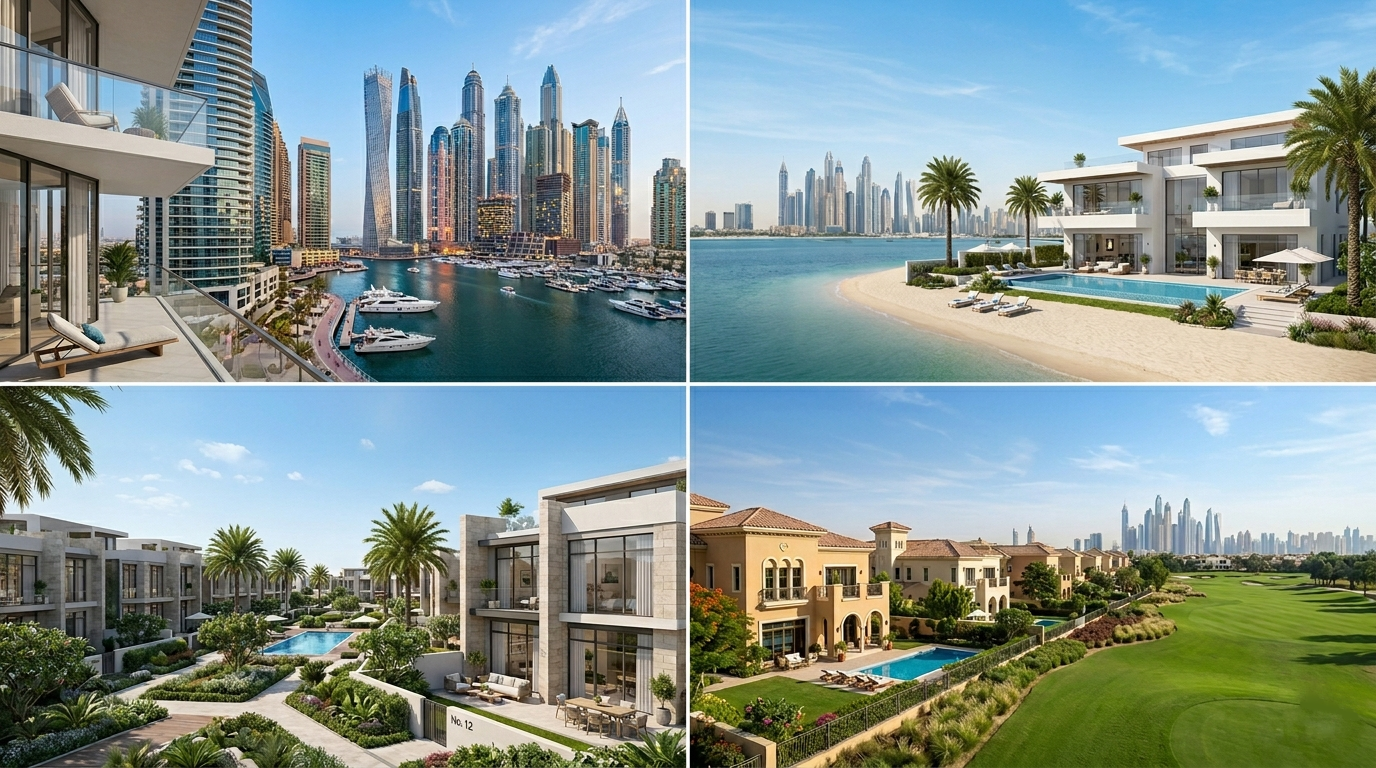
Dubai apartments, townhouses and villas
Buyer & Investor Guides

What is the Best Type of Dubai Property to Invest In?

Quick Summary The best type of Dubai property to invest in depends entirely on what you are optimising for. Apartments, particularly studios and one-bedroom units, deliver the strongest rental yields. Villas tend to produce the highest absolute income but lower percentage returns, while townhouses sit between the two on both measures. For most first-time investors with a budget under AED 2.5 million, apartments are the most practical entry point. For patient capital with a longer hold horizon, villas in established communities can be stronger total-return assets. There is no single best type of Dubai property to invest in. There is only the best type for your budget, your income goals, and how long you plan to hold. The question is worth answering carefully because the choice between a studio, a one-bedroom apartment, a townhouse, and a villa is not just a price decision. Each comes with a different yield profile, a different tenant, a different set of costs, and a different exit. Start With Your Goal: Rental Yield vs Capital Appreciation Before comparing property types, be clear on what you are trying to achieve. Dubai investors broadly fall into two camps. Income investors want yield. They want rent arriving in their account and a return that justifies the capital deployed. For them, the percentage yield matters more than the absolute rent figure, and liquidity matters because they may want to redeploy capital. Appreciation investors want growth. They are willing to accept a lower income yield in exchange for a property that gains value over time, often in a premium location where supply is limited and demand from high-net-worth tenants and buyers remains strong. Most investors want some of both. But being honest about which matters more will point you toward the right property type before you look at a single listing. Studios: Highest Yield, Weaker Tenant Profile Studios are the highest-yielding unit type in Dubai on a per-square-foot basis. They command the highest rate of any apartment size. Entry prices in well-located communities typically run from roughly AED 400,000 to AED 700,000. A studio purchased at AED 500,000 and renting for AED 40,000 per year produces an 8% gross yield. After service charges and costs, net yield typically lands lower. The trade-off is tenant profile. Studios attract single professionals and new arrivals, a tenant segment with higher turnover than families or couples in larger units. Studios make the most sense for investors who want maximum income yield on a modest budget and are comfortable with slightly more active management. One-Bedroom Apartments: A More Balanced Investment If one unit type stands out as the most consistently sensible investment across Dubai’s apartment market, it is the one-bedroom. One-bedroom apartments attract one of the widest and deepest pools of tenants in Dubai: young professionals, couples, and mid-level corporate employees. It means one-bedroom apartments are generally easier to lease quickly, easier to resell, and more resilient across different market phases than studios or larger units. Entry prices range from around AED 600,000 in mid-market communities to AED 1.5 million and above in premium locations. For a first-time investor who wants strong income yield combined with manageable risk, a one-bedroom apartment in a well-run community with healthy transaction volume is the most dependable starting point. Two-Bedroom Apartments: Better Stability, Slightly Lower Yield Two-bedroom apartments tend to attract couples, small families, or sharers. Those tenants usually stay longer and renew more reliably, which reduces vacancy costs and management friction over time. Purchase prices for two-bedroom apartments in solid communities run from around AED 1.1 million to more than AED 2.5 million depending on location and specification. Gross yields are usually a little lower than one-bedroom units, but the stability of the income stream over multiple years often compensates. Two-bedroom apartments work particularly well for investors who want lower management intensity and are prepared to hold for three to five years or more. Townhouses: Family Tenants, Longer Stays Townhouses attract family tenants who want more space, a garden, and a community setting. That usually means longer stays, lower turnover, and less day-to-day hassle than smaller apartments. In Dubai, they sit between apartments and villas on both yield and stability. Pricing varies a lot by community. In Town Square, three-bedroom townhouses often start around AED 2.55M, while in Arabian Ranches the floor is closer to AED 3.5M, with many homes priced higher depending on phase, size, and condition. That makes Town Square the more affordable townhouse market, while Arabian Ranches sits at a more premium level. The yield trade-off is still the same: townhouses usually deliver lower percentage returns than apartments, but stronger tenant stability. They suit investors who care more about consistent occupancy and lower management friction than maximizing gross yield. Villas: Lower Yield, Higher Absolute Income, Strongest Appreciation Villas are a different investment category. They produce higher absolute rent, but because entry prices are much higher, gross yields are lower than apartments and usually below townhouses as well. What villas can offer instead is stronger capital growth in the right communities over the right period. Limited supply, family demand, and premium buyer interest have supported performance in several established villa areas, but this is highly community and cycle-dependent. It is better to say villas can outperform on total return over longer holds than to treat that as a universal rule. For investors with more capital, a longer hold horizon, and tolerance for slower leasing and higher maintenance costs, a well-chosen villa can be a strong wealth-building asset. But it is not the best entry point for investors prioritizing yield or quick liquidity. Off-Plan vs Ready: A Separate Decision Within Each Category Whichever property type you choose, you will face a secondary decision between buying off-plan directly from a developer or purchasing a ready unit in the secondary market. Off-plan properties typically offer lower entry prices, staged payment plans spread across the construction period, and potential capital appreciation between purchase and handover. The risk is delivery timeline and the fact that you receive no rental income
Read More »
Area Spotlights

How Much Rental Income Can You Expect from Dubai Property?

Quick Summary Dubai consistently delivers gross rental yields of 6% to 8% on apartments, 5% on townhouses, and around 4.5% to 5% on villas, based on April 2026 registered contract data from Property Monitor. After costs, most investors net 4% to 6% annually, tax-free, which compares favourably against London, Singapore, and most European city equivalents. What you actually earn depends less on Dubai as a whole and more on property type, location, and how the unit is managed. If you are considering buying property in Dubai for rental income, the answer to what you can expect is both more specific and more honest than most conversations about this market tend to be. Start with what yield actually means in practice, then look at what tenants are genuinely paying right now. Start With What Yield Actually Means When someone tells you Dubai offers 7% rental yield, they mean that a property purchased at AED 1,000,000 generates roughly AED 70,000 per year in rent. That is the gross figure. Your net return, after costs, is lower. How much lower depends on the property. For context, AED 70,000 per year is approximately $19,000 or £15,000. With no local income tax in Dubai, that amount reaches your account without the 20% to 45% deduction that would apply in the UK, US, or most of Europe. That tax difference is one of the most significant and genuinely underappreciated advantages of Dubai as an investment location. Is Dubai Good for Rental Income? By most global measures, yes. Gross yields of 6% to 7% on apartments are roughly double what investors earn in London, New York, or Singapore. The absence of local income tax means that gap widens further in practice, because what you earn in Dubai you largely keep, whereas rental income in most Western markets is taxed at your marginal rate. The other factor worth considering is currency stability. Rent in Dubai is paid in AED, which has been pegged to the US dollar since 1997. For investors from volatile currency environments, that peg provides a degree of income stability that property in many other markets cannot offer. Dubai is not without risk. Oversupply in certain apartment segments, service charge increases, and rent controls all affect returns. But as an income-generating asset class in a tax-efficient, dollar-linked environment with deep tenant demand, Dubai property compares favourably against most alternatives at a similar price point. What the April 2026 Data Actually Shows Dubai’s overall gross rental yield across all property types sits at 6.62% as of April 2026. The number looks different depending on what you buy. Apartments are the strongest performer at 7.13% gross yield. Townhouses come in at 5.10%. Villas sit at 4.62%. These figures come from actual registered contracts, not asking prices or agent estimates. Yields have been rising steadily. In May 2023, the market-wide gross yield was 5.33%. It has climbed to 6.62% by April 2026. Apartments have driven most of that movement, going from 5.78% to 7.13% over the same three years. That trajectory matters if you are buying now: apartments have been the most consistent income performers across that period, and the trend has not reversed. What Different Property Types Generate For an investor trying to size an expected return, the most useful lens is property type and bedroom count. Here is what tenants in Dubai were actually paying in April 2026. Apartments 28,650 contracts were signed in April 2026 alone, totalling AED 1.97 billion in annual rent. That volume tells you the market is liquid. You can find tenants, and you can exit if needed. Studios averaged AED 38,769 per year. One-bedroom apartments, the most transacted unit type with over 11,000 contracts in a single month, averaged AED 59,356. Two-bedroom apartments averaged AED 81,817. Those are the three size categories where investor returns are typically strongest because purchase prices are more accessible and tenant demand is deep. If you buy a one-bedroom apartment at AED 800,000 in a well-located community and rent it for AED 60,000 per year, that is a 7.5% gross yield. Subtract service charges, a month of vacancy, and any management fees, and your net return lands around 5% to 5.5%. On AED 800,000 invested with no tax on the income, that is AED 40,000 to AED 44,000 per year reaching your account. Villas A different calculation. The average annual rent for a four-bedroom villa in April 2026 was AED 334,458. Five-bedroom villas averaged AED 446,522. These are substantial income figures in absolute terms, but the purchase prices are larger, which is why yields compress to 4.62% on average. Investors who buy villas in Dubai are typically making a combined bet on rental income and capital appreciation, particularly in communities like Dubai Hills Estate, Umm Suqeim, and Arabian Ranches where tenant demand from high-income families is sustained. Townhouses The middle ground. Three-bedroom units dominate the market at AED 151,676 average annual rent, with a gross yield of around 5.10%. Good for investors who want something between the high yield of apartments and the absolute income of villas, particularly in community developments where family occupancy tends to be stable and tenancy lengths longer. The Cost Conversation Gross yield is what gets quoted in listings. Net yield is what you actually earn. The difference is real and worth understanding before you buy. Service charges are the biggest variable. These are annual fees paid to the developer or owners association for maintenance of shared spaces and facilities. In well-established communities they run AED 10 to AED 18 per sq ft per year. In premium towers with more amenities, AED 20 to AED 35 per sq ft is common. On a 900 sq ft apartment, that is anywhere from AED 9,000 to AED 31,500 per year, before rent reaches your account. Checking the RERA service charge index for a specific building before you buy can save you from a costly surprise. Vacancy sits at roughly 2 to 4 weeks between tenancies in a well-managed property. That is around 4%
Read More »
Apartment Keys
Buyer & Investor Guides

What Should You Know Before Buying an Apartment in Dubai?

TL;DR: Buying an apartment in Dubai is open to any nationality, requires no residency visa, and involves a 4% DLD transfer fee on top of the purchase price. The key decisions are freehold vs leasehold, off-plan vs ready, and location relative to your actual life or rental demand. Service charges, cash reserves, and building condition are where most buyers get caught out. Buying an apartment in Dubai is one of the more straightforward property purchases you can make, but straightforward does not mean simple. Dubai closed 2025 with over 270,000 property transactions totalling AED 917 billion, the highest in the city’s history and the fifth consecutive record-breaking year. That level of activity means more choice, more competition, and more pressure to move fast. It also means more room to make an expensive mistake if you skip the groundwork. This post covers what actually matters before you commit. Start With Your Purpose, Not the Property Before you look at a single listing, decide what this apartment is for. That one decision shapes everything else. If you are buying to live in, your priorities are commute time, nearby schools, noise levels, parking, and how the building feels day to day. If you are buying as an investment, your priorities are rental demand in the area, service charge to yield ratio, tenant profile, and how liquid the community is if you need to sell. Studios and one-bedroom apartments consistently outperform larger units on yield and occupancy. They tend to be easier to rent, easier to sell, and attract a wider tenant pool. If you are buying a family home, think beyond your current needs. A two-bedroom that works today may not work in three years. Villas and townhouses offer more long-term flexibility for growing families, even if the entry price is higher. If you are weighing both goals, being clear about which one takes priority helps you filter properties more effectively and choose a location that genuinely serves your needs. The Real Costs of Ownership The Purchase Costs Everyone Mentions The costs that appear in every guide are real and worth knowing: Dubai Land Department transfer fee: 4% of the purchase price, paid at the time of transfer. This is non-negotiable and applies to all transactions. Trustee office fees sit at around AED 4,000 for properties under AED 500,000 and AED 8,000 above that. Agency commission is typically 2% of the purchase price. If the property is mortgaged, mortgage registration with the DLD adds 0.25% of the loan amount. For off-plan purchases, the Oqood registration fee replaces the title deed registration and is also 4%. Budget a minimum of 6% to 8% on top of the purchase price to cover these costs comfortably. The Ongoing Costs That Catch Buyers Off Guard Service charges are where many buyers get surprised. These are annual fees charged per square foot, covering building maintenance, shared facilities, security, and a reserve fund. They vary significantly by building and community. A gym, pool, and concierge in a premium tower costs more to maintain than a mid-market building with basic amenities. Before buying, request the RERA-registered service charge history for the building. Look for increases over the past three to five years. Some buildings have seen charges rise sharply after handover, particularly in communities where the developer initially subsidised them. Check whether there are any outstanding arrears on the unit you are buying, as these transfer with ownership. Beyond service charges, factor in home contents insurance, maintenance of your own unit over time, and if you are renting it out, property management fees which typically run between 5% and 10% of annual rent. Make sure your purchase sits within a budget that leaves room for the unexpected. A comfortable cash position after closing gives you flexibility and protects the investment you have just made. Freehold vs Leasehold: What Actually Matters for Apartment Buyers Freehold means you own the property and the land it sits on outright, with the right to sell, lease, or pass it on. Leasehold means you hold usage rights for a fixed period, typically 30 to 99 years, after which ownership reverts to the freeholder. For apartment buyers, the practical distinction is this: freehold properties sit in designated zones open to foreign ownership. Leasehold is less common for residential apartments in Dubai and carries weaker resale demand and longer-term uncertainty. Most apartments buyers look at will be in freehold areas. The main ones include Downtown Dubai, Dubai Marina, Business Bay, JVC, Palm Jumeirah, Dubai Hills Estate, and City Walk. Always confirm freehold status with the Dubai Land Department before proceeding. Freehold also matters for visa eligibility. The Golden Visa and property investor visa are only available for purchases in DLD-approved freehold zones. Off-Plan vs Ready: Picking the Right Fit for Your Situation Off-plan means buying a unit before or during construction. The appeal is a lower entry price, flexible payment plans tied to construction milestones, and the potential for the unit to appreciate in value by the time it is handed over. Many developers offer 60/40 or 70/30 plans, where you pay the bulk during construction and the remainder on handover. The risks are real. Construction can be delayed. Developer quality varies significantly. Some contracts restrict resale before completion. And the market may move in either direction by the time you take possession. Dubai’s RERA regulates off-plan sales through mandatory escrow accounts. Developer payments go into escrow and are released only when verified construction milestones are reached. This protection has made off-plan significantly safer than it was a decade ago. Always check that the project is RERA registered and that escrow is in place before signing anything. Ready properties cost more upfront, but you take possession immediately, can rent the unit out straight away, and know exactly what you are buying. For buyers who want income from day one or simply want certainty, ready is usually the cleaner choice. The decision comes down to your timeline and whether you need the property to perform now or

Read More »

Most Recent Posts

Category

Tags